
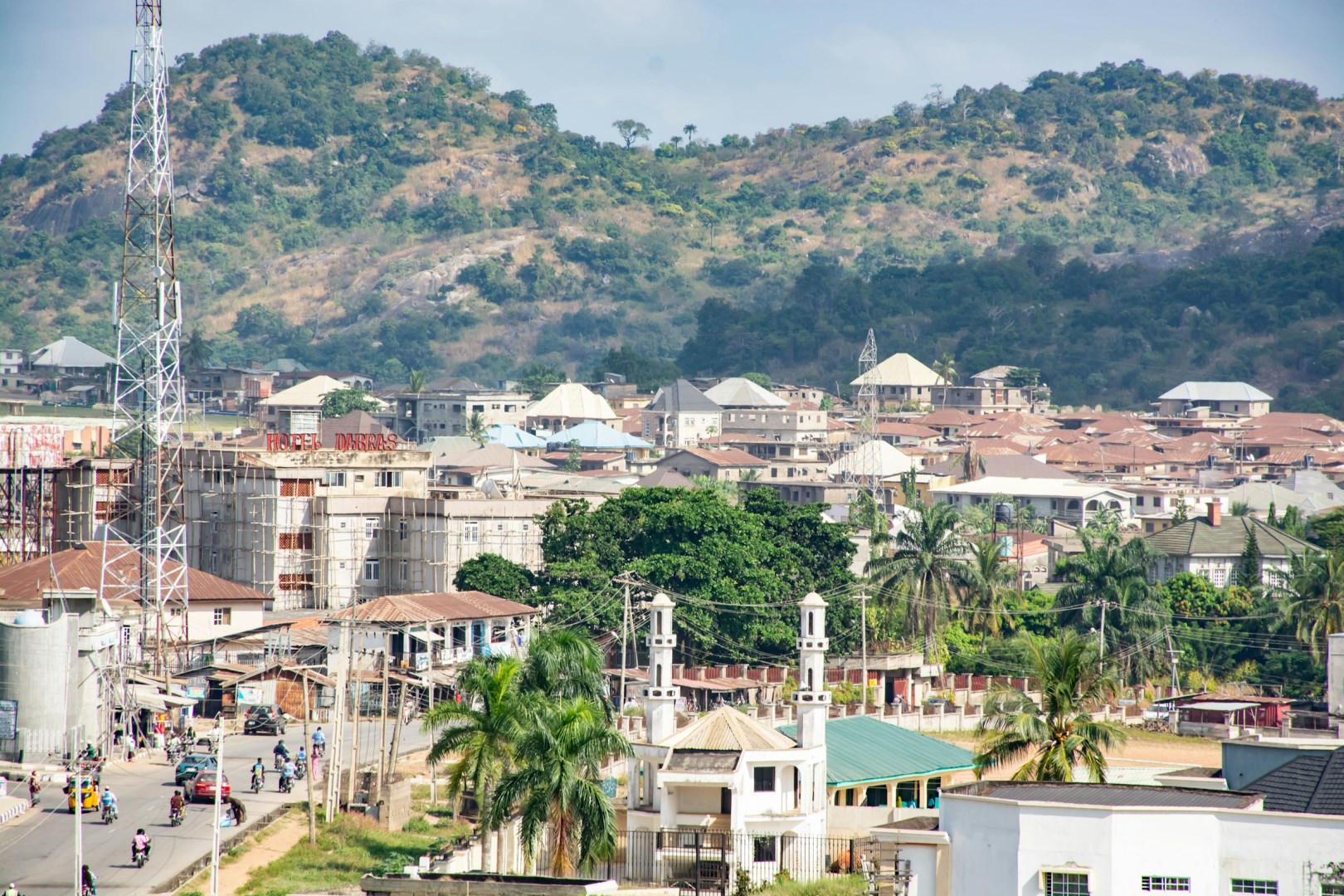
Okene is a town in Kogi State in north-central Nigeria, set among the hills of the central Nigerian landscape. It is the principal urban centre of the Ebira people and lies along an important road corridor linking communities around Lokoja with areas farther east and south. Rocky hills rise around the town, while cultivated land extends through the surrounding valleys and plains. Okene functions as a centre for local government, trade, education and services, drawing people from nearby farming communities to its markets and commercial districts.
Ebira language and traditions are central to Okene’s identity. One of the best-known cultural events is the Ekuechi festival, an Ebira masquerade tradition involving masked performers, music and community gatherings. Traditional weaving is another important part of Ebira heritage, particularly the production of handwoven cloth with distinctive patterns. The Ohinoyi of Ebiraland serves as the traditional ruler of the Ebira people, and the Ohinoyi’s palace in Okene is a prominent cultural institution. Oral traditions, drumming, dance and extended family networks continue to play significant roles in ceremonies and community life.
Okene is surrounded by rugged terrain associated with the Okene Hills, whose rocky slopes give the area a noticeably different appearance from the broad plains found elsewhere in Kogi State. Roads pass between hills and cultivated valleys, providing views across farms and scattered settlements. The town is also relatively close to the Itakpe area, known for major iron ore deposits that have contributed to the industrial importance of this part of Kogi State. Agriculture remains visible throughout the surrounding countryside, where crops including cassava, yam, maize and vegetables are grown alongside areas of woodland and grassland.
Food in Okene reflects Ebira traditions as well as the broader cooking of central Nigeria. Cassava, yam, maize and beans provide important staples, accompanied by vegetable and meat-based soups. Apapa, a steamed bean preparation related to Nigerian moi moi, is associated with Ebira cooking, while locally grown grains and tubers appear in everyday meals. Markets sell peppers, tomatoes, groundnuts, vegetables and seasonal produce from surrounding farms.
Other Popular Destinations in Nigeria