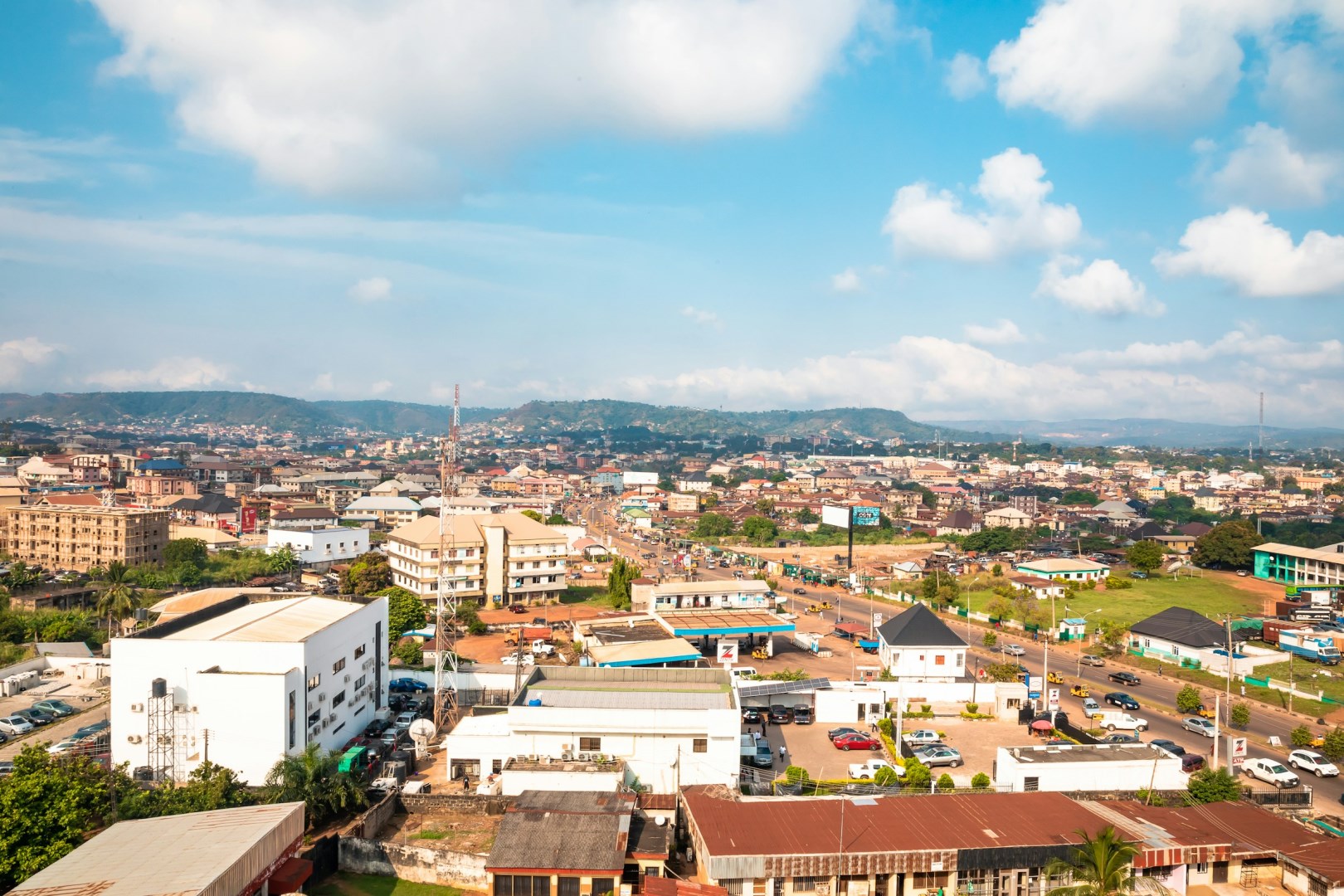



Enugu is the capital of Enugu State in southeastern Nigeria, set among rolling hills at the edge of the Udi Plateau. Its name comes from the Igbo expression “Enu Ugwu,” meaning “top of the hill,” a reference to the area’s elevated landscape. The city grew into an important regional centre because of nearby coal deposits and remains closely identified with Nigeria’s coal-mining heritage. Today, Enugu serves as a major administrative, educational and commercial centre for southeastern Nigeria, with broad avenues and residential districts spreading between wooded hills and distinctive rocky slopes.
Enugu lies within the Igbo cultural heartland, and Igbo language, customs and community traditions remain central to local identity. Masquerade performances, music and dance appear during festivals and ceremonies, while traditional crafts include weaving, pottery and carved objects. The city has also played an important role in Nigerian popular culture, particularly through highlife music and the country’s film industry. Coal mining forms another major part of local heritage, reflected in sites such as the former Iva Valley and Onyeama mines. The National Museum of Unity preserves archaeological, artistic and ethnographic objects representing cultures from across Nigeria.
The hills around Enugu provide some of the city’s most recognizable scenery. Milliken Hill rises west of the centre, with a winding road that provides broad views over Enugu and the surrounding countryside. Nike Lake lies on the city’s northeastern side and forms an important recreational area. Nearby Ngwo is known for its pine forest, limestone cave and waterfall, where water passes through a rocky setting surrounded by dense vegetation. Beyond the city, Enugu State contains other notable natural sites, including Awhum Waterfall, as well as the unusual Nsude pyramid structures associated with traditional Igbo religious and cultural practices.
Enugu’s food reflects the cooking traditions of southeastern Nigeria. Abacha, often called African salad, is prepared from shredded cassava and commonly combined with palm oil, peppers, onions and other ingredients. Okpa, a steamed pudding made from Bambara groundnut flour, is especially associated with Enugu and is widely sold as a filling street food. Other common dishes include soups such as oha and nsala, usually served with fufu or another starchy accompaniment. Palm wine is also part of social and ceremonial life in many Igbo communities, linking the city’s contemporary food culture with agricultural traditions found throughout the surrounding region.
Other Popular Destinations in Nigeria